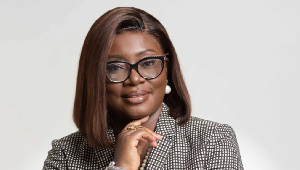
Chief Executive Officer of Charterhouse, Theresa Ayoade, has stated that award schemes in Ghana often mirror the broader challenges facing the country’s music industry.
Speaking about concerns raised over nominations in certain categories, Ayoade explained that the structure of award schemes simply reflects what is happening within the industry itself. According to her, the trends seen in nominations, including the limited presence of some groups, are largely a result of deeper structural issues in the music sector.
She pointed out that one of the recurring issues is the relatively low number of female artistes actively producing music compared to their male counterparts. As a result, categories that depend on submissions and releases may naturally show fewer female nominees. Ayoade stressed that this situation should not necessarily be interpreted as bias within the awards system but rather as a reflection of the realities within the industry.
According to her, award schemes depend heavily on the work that musicians put out during the eligibility period. If fewer female musicians release projects within that timeframe, it will automatically affect the number of nominations they receive.
Ayoade also highlighted the broader challenges confronting the music industry, including structural limitations, gaps in support systems, and the need for stronger industry development. She noted that these challenges affect how the industry grows and how talent is represented across different categories.
She further emphasised that award schemes serve as a platform to showcase the state of the music industry. In her view, they provide an opportunity for stakeholders to assess the industry’s progress and identify areas that need improvement.
Theresa Ayoade is widely known as the head of Charterhouse, the company behind Ghana’s biggest music awards platform. Over the years, the awards scheme has played a significant role in recognising musicians and promoting Ghanaian music locally and internationally.
Her comments have reignited conversations about gender representation and the structural challenges within the Ghanaian music industry, with many stakeholders calling for stronger support systems to help more female artistes thrive.