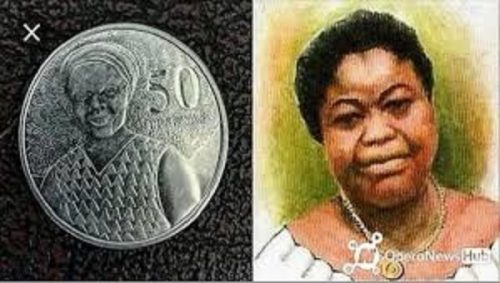
Rebecca Naa Dedei Aryeetey, the woman whose image appears on Ghana’s 50 pesewas coin, played a crucial role in supporting Kwame Nkrumah during the country’s struggle for independence. Her financial and political support helped Nkrumah secure an important legislative council seat that later paved the way for his leadership of the nation.
Aryeetey, popularly known as Dedei Ashikishan, was a successful businesswoman from Osu in Accra. She built significant wealth through her flour trading business, which earned her the nickname Ashikishan, a Ga word associated with flour. Her financial success gave her influence in political circles during the late colonial period.
At a time when the Convention People’s Party was mobilising support for independence, Aryeetey emerged as one of the party’s most dedicated financiers and organisers. She hosted meetings of the party’s women’s wing at her residence in Kokomlemle and provided logistical and financial assistance for political campaigns.
One of her most significant contributions was financing Kwame Nkrumah’s campaign to win the Ashiedu Keteke seat in the Legislative Council. This victory was a major political breakthrough that strengthened Nkrumah’s influence and eventually positioned him to become the first Prime Minister of Ghana.
Beyond her financial support, Aryeetey was also an influential political activist who mobilised women to participate in the independence movement. Her leadership helped build grassroots support for Nkrumah and the Convention People’s Party during the critical years leading to Ghana’s independence.
Despite her major contributions to Ghana’s political history, Aryeetey remains one of the lesser known figures of the independence struggle. To honour her legacy, the government later placed her image on the 50 pesewas coin during the currency redenomination in 2007.
Rebecca Naa Dedei Aryeetey died in 1961 at the age of 38. Her life and contributions continue to be remembered as an example of the powerful role women played in shaping Ghana’s political and social history.