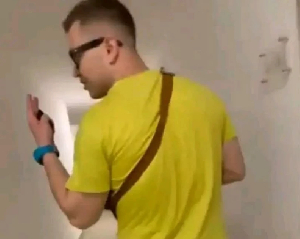
The Embassy of the Russian Federation in Ghana has issued a formal response after a series of controversial videos involving a man claiming to be Russian sparked widespread public outrage online and in the media. The videos showed the individual interacting with several Ghanaian women and allegedly recording intimate encounters without their consent before sharing them on social media platforms.
In a statement shared on social media on February 16, 2026, the Russian Embassy said it had “taken note” of media reports about the alleged conduct of a supposed Russian citizen involved in the scandal. The mission acknowledged the seriousness of the claims but did not confirm the identity of the man or whether he was actually a Russian national.
The viral clips, which circulated widely on platforms such as TikTok and YouTube, drew sharp criticism from Ghanaian users and commentators who condemned the acts as violations of privacy and digital dignity. According to several reports, the man, identified in online content as “Yaytseslav” or Vyacheslav Trahov, was alleged to have used hidden recording devices like camera-equipped glasses to capture private moments with the women and then posted the content online, including on subscription channels.
Ghanaian authorities have taken the matter seriously. Government officials have condemned the alleged conduct as unlawful under Ghana’s Cybersecurity Act, which criminalises the distribution of intimate images without full consent and carries strict penalties. The Ministry of Gender, Children and Social Protection publicly denounced the recordings as an affront to personal dignity and privacy.
Efforts to hold the alleged offender accountable are reportedly underway. Ghana’s Minister for Communications, Digital Technology and Innovation has summoned the Russian ambassador and is pursuing cooperation with international law enforcement agencies such as Interpol in an attempt to secure legal action, including possible extradition, even though it is unclear whether the man remains in the country.
The controversy has also sparked a broader discussion in Ghana about consent, digital rights, and the ethical use of technology, with many citizens calling for stronger protections against non-consensual recordings and the exploitation of women online.