
Ghana has begun a major project to construct boundary pillars along its land border with Côte d’Ivoire as part of efforts to clarify the international boundary, protect territorial integrity and promote peaceful coexistence between the two neighbouring countries. The work is being coordinated by the Ghana Boundary Commission under the Ministry of Lands and Natural Resources, and it forms part of a broader boundary reaffirmation exercise agreed by both states.
The reaffirmation programme, which officially entered the pillar construction phase in January 2026, involves building 37 boundary markers at designated points along the shared frontier. These include main pillars, intermediate pillars, border crossing markers and a terminus pillar. So far, a total of 14 pillars have been completed, including historically significant markers such as the Tano Pillar and the Farafarako International Boundary Pillar.
Officials say the effort is crucial because many older boundary markers placed during the colonial era have deteriorated or been obscured by vegetation and development over the decades. Updating and reaffirming these landmarks helps prevent disputes and makes the border easier to manage and monitor over time. The project is also designed to strengthen regional stability and cooperation between Ghana and Côte d’Ivoire by maintaining clearly defined national frontiers.
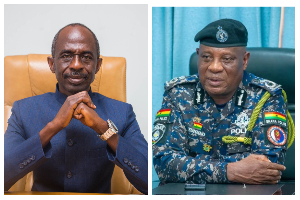
During recent field inspections, the Commissioner-General of the Ghana Boundary Commission, Major General Anthony Ntem, explained that the Commission’s constitutional mandate includes protecting Ghana’s land borders as well as maritime and airspace boundaries. He highlighted that the pillar construction is being carried out in phases and in close collaboration with local communities so that residents understand the reaffirmation process and contribute to maintaining the markers in future.
The work is scheduled for completion by March 31, 2026, and strong community engagement has been emphasised to reduce chances of future boundary disputes. The project also reflects continued efforts by both Ghana and Côte d’Ivoire to finalise their long-term boundary reaffirmation and to build mutual confidence in shared border management.